|
Click here to download the detailed preliminary programme. A final update, which may include some changes, will be available a few days before the conference, so do visit the website again before the conference.
The conference is structured into 7 sessions. Each session starts with a keynote presentation. Details on the keynote presenters and talk titles are given here.
Session 1: Plenary talk
Mr Lewis Mathieson (Armscor, South Africa): "The South African Radar Industry: A Contemporary Perspective"
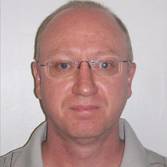 Lewis Mathieson graduated from the University of Natal in Durban with a BScEng degree in electronic engineering in 1988. After completing the officer’s course in the South African Corps of signals he took up the position of systems engineer in the Radar & EW division of the CSIR. He later joined the Altech group as a project manager on military Air Traffic Control systems. In 1995 he joined Armscor as the programme manager of the combat systems for the South African Navy’s Valour class frigates. He then joined the Grintek group as executive head of engineering for Grintek Communication Systems. In 2004 he re-joined Armscor as Acting divisional manager for the Radar & EW division. He completed an MBL degree in 2004 and is currently the co-ordinator of the South African Radar Interest Group and works as a specialist consultant to a number of acquisition programmes within the Department of Defence. Lewis Mathieson graduated from the University of Natal in Durban with a BScEng degree in electronic engineering in 1988. After completing the officer’s course in the South African Corps of signals he took up the position of systems engineer in the Radar & EW division of the CSIR. He later joined the Altech group as a project manager on military Air Traffic Control systems. In 1995 he joined Armscor as the programme manager of the combat systems for the South African Navy’s Valour class frigates. He then joined the Grintek group as executive head of engineering for Grintek Communication Systems. In 2004 he re-joined Armscor as Acting divisional manager for the Radar & EW division. He completed an MBL degree in 2004 and is currently the co-ordinator of the South African Radar Interest Group and works as a specialist consultant to a number of acquisition programmes within the Department of Defence.
Session 2: Antennas
Dr Rob Maaskant (Chalmers University of Technology): "Electromagnetic Simulation of Large Antenna Array Systems – Combining Enhanced Integral-Equation Methods with Circuit Models"
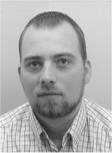 Rob Maaskant was born in Rotterdam, the Netherlands, in 1978. He received the M.Sc. and Ph.D. degree, both cum laude, in Electrical Engineering from the Eindhoven University of Technology, the Netherlands, in 2003 and 2010, respectively. From 2003-2010 he has been an antenna scientist at the Netherlands Institute for Research in Astronomy (ASTRON) where his research was carried out in the framework of the Square Kilometre Array (SKA) radio telescope project. He is holder of five patents, two on RFID systems, two on antennas for the SKA, and one on a novel Class-D amplifier. He serves as a reviewer for the ACES journal, the IEEE Transactions on Antennas and Propagation, and the Antennas and Wireless Propagation Letters. He is the main developer of the CAESAR software, a combined electromagnetic and microwave circuit simulator for analyzing very large antenna array systems. He received the 2nd Best Paper Award (’Best team contribution’) at the ESA Antenna Workshop in 2008. In 2010, the Netherlands Organization for Scientific Research (NWO) awarded him the Rubicon grant. This fellowship allows him to perform two years of postdoctoral research at the Signal and Systems Department of the Chalmers University of Technology, Sweden. Currently, his research interests include the development of numerically efficient integral-equation techniques for the analysis of novel gap-waveguide structures, large finite array antennas, and the characterization and design of antenna array receiving systems for radio astronomy. Rob Maaskant was born in Rotterdam, the Netherlands, in 1978. He received the M.Sc. and Ph.D. degree, both cum laude, in Electrical Engineering from the Eindhoven University of Technology, the Netherlands, in 2003 and 2010, respectively. From 2003-2010 he has been an antenna scientist at the Netherlands Institute for Research in Astronomy (ASTRON) where his research was carried out in the framework of the Square Kilometre Array (SKA) radio telescope project. He is holder of five patents, two on RFID systems, two on antennas for the SKA, and one on a novel Class-D amplifier. He serves as a reviewer for the ACES journal, the IEEE Transactions on Antennas and Propagation, and the Antennas and Wireless Propagation Letters. He is the main developer of the CAESAR software, a combined electromagnetic and microwave circuit simulator for analyzing very large antenna array systems. He received the 2nd Best Paper Award (’Best team contribution’) at the ESA Antenna Workshop in 2008. In 2010, the Netherlands Organization for Scientific Research (NWO) awarded him the Rubicon grant. This fellowship allows him to perform two years of postdoctoral research at the Signal and Systems Department of the Chalmers University of Technology, Sweden. Currently, his research interests include the development of numerically efficient integral-equation techniques for the analysis of novel gap-waveguide structures, large finite array antennas, and the characterization and design of antenna array receiving systems for radio astronomy.
Session 3: Radar and Systems
Dr Surendra Pal (Indian Space Research Organization)
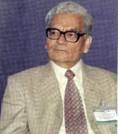 Surendra Pal, an alumnus of Birla Institute of Technology & Science (BITS), Pilani and Indian Institute of Science (IISc), Bangalore, India, formerly, Distinguished Scientist, Associate Director and also Program Director, Satellite Navigation Program at ISRO Satellite Centre, Bangalore (till 31stMarch 2010), is presently Prof. Satish Dhawan Professor & Senior Advisor Satellite Navigation Programme. Surendra Pal, an alumnus of Birla Institute of Technology & Science (BITS), Pilani and Indian Institute of Science (IISc), Bangalore, India, formerly, Distinguished Scientist, Associate Director and also Program Director, Satellite Navigation Program at ISRO Satellite Centre, Bangalore (till 31stMarch 2010), is presently Prof. Satish Dhawan Professor & Senior Advisor Satellite Navigation Programme.
He joined Indian Space Research Organization (ISRO) in 1971, after a brief tenure at Tata Institute of Fundamental Research. Dr. Pal pioneered the Microwave , Antenna & RF communication activities at the ISRO Satellite Centre at the inception. He has been responsible for the development & fabrication of all spacecraft related telecommunication systems for India’s all satellites beginning with Aryabhata to the present day IRS , INSAT series of spacecraft & Chandrayan. Dr. Pal is also responsible for pioneering satellite based navigation activities in India, the Indian Satellite Based Wide Area Augmentation System – GAGAN (GPS Aided Geo Augmented Navigation System) and Indian Regional Navigation Satellite System (IRNSS) activities for aviation for civilian & restricted users. These two programmes initiated by him at ISRO and will have huge technological impact and benefit a host of users in the region. Dr. Pal and his team successfully took the challenge of designing 32 M diameter antenna system for Indian Deep Space Network for Chandrayaan-I. Chandrayaan has brought a lot of laurels to the organization in particular and India in general.
His expertise in his field has been utilized as consultant by many national and international organizations. Examples being: (I) INMARSAT/ICO (UK) for LEOSAT definitions, responsible for the development of Satellite Hand Held Telephone Antenna System for ICO (UK) (ii) International Telecommunication Union (ITU) for defining Regional African Satellite Communication System and (iii) Nanyang Technolgical University, Singapore on X-Sat. He was also Chairman of Information Infrastructure Working Group of Ministry of Information Technology , Govt. Of India.
He is also on the United Nations panel of experts on Global Navigation Satellite Systems (GNSS) and Chaired/participated in various UN meetings at Vienna, Geneva and at other international venues. Dr. Pal a Distinguished Fellow of IETE, Fellow of Indian National Academy of Engineering, Indian National Academy of Sciences, Fellow IEEE(USA), has received more than one and a half dozen national and international awards, including, Performance Excellence Award by ISRO. Besides the awards he holds Indian, European & International patents for his various inventions. In the year 2010 ,IEEE gave its top level awards and he was the recipient of the prestigious IEEE-2010 Judith . A .Resnik Award .
Dr. Pal has published more than 220 papers in international and national journals of repute , one book on communications & guided number of Ph.D students. He was a Distinguished Visiting Professor of Indian National Academy of Engineering & presently he is on the Distinguished Lecturer Programme of IEEE/AESS USA.
Session 4: Computational Electromagnetics
Prof David Davidson (Stellenbosch University): "Recent Advances in Full-wave Computational Electromagnetics for RF and Microwave Applications"
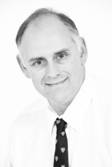 David Bruce Davidson was born in London, U.K., 1961. He received the B.Eng, B.Eng (Hons), and M.Eng degrees (all cum laude) from the University of Pretoria, South Africa, in 1982, 1983, and 1986 respectively, and the Ph.D. degree from the University of Stellenbosch, Stellenbosch, South Africa, in 1991. David Bruce Davidson was born in London, U.K., 1961. He received the B.Eng, B.Eng (Hons), and M.Eng degrees (all cum laude) from the University of Pretoria, South Africa, in 1982, 1983, and 1986 respectively, and the Ph.D. degree from the University of Stellenbosch, Stellenbosch, South Africa, in 1991.
Following national service (1984-5) in the then South African Defence Force, he was with the Council for Scientific and Industrial Research, Pretoria, South Africa, prior to joining the University of Stellenbosch in 1988. As of 2011, he holds the South African Research Chair in Electromagnetic Systems and EMI Mitigation for SKA there. He was a Visiting Scholar at the University of Arizona in 1993, a Visiting Fellow Commoner at Trinity College, Cambridge University, England in 1997, a Guest Professor at the IRCTR, Delft University of Technology, The Netherlands, in 2003, and an Honorary Visitor, University of Manchester, UK in 2009. His main research interest is computational electromagnetics (CEM), and he has published extensively on this topic. He is the author of the recently revised text "Computational Electromagnetics for RF and Microwave Engineering" (Cambridge, U.K.: Cambridge Univ. Press, 1st edn, 2005, 2nd end, 2011).
He is a Senior Member of the IEEE, the Applied Computational Electromagnetics Society (ACES) and the South African Institute of Electrical Engineers (SAIEE), and is a Past Chairman of the IEEE AP/MTT Chapter of South Africa. He is a recipient of the South African FRD (now NRF) President's Award; presently, he has a B2 research rating from the NRF. He received the Rector's Award for Excellent Research from the University of Stellenbosch in 2005. Currently, he is the editor of the "EM Programmer's Notebook" column of the IEEE ANTENNAS AND PROPAGATION MAGAZINE, and an Associate Editor of the IEEE ANTENNAS AND WIRELESS PROPAGATION LETTERS. He served as General Chair of the "8th International Workshop on Finite Elements for Microwave Engineering", held in Stellenbosch, May 2006, and was also joint Guest Editor for the special issue of ELECTROMAGNETICS (Vol 28, Nos 1-2, 2008) which featured selected papers from the conference. He was awarded a Flagship Project, entitled “HPC electromagnetic simulation for the MeerKAT and SKA”, by South Africa’s Centre for High Performance Computing, from 2008-2010.
Session 5: Passive and Active Devices
Prof Irina Vendik (St Petersburg Electrotechnical University): "Miniature Multifunctional Microwave Devices based on Metamaterials Design approach in LTCC".
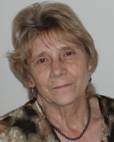 Irina Vendik received the M.S. in Electronics in 1959, Ph.D. in 1966, the both from Leningrad Electrical Engineering Institute (St. Petersburg Electrotechnical University since 1990), and D. Sc. in Physics and Mathematics in 1990 from A.F. Ioffe Physical-Technical Institute of RAN, St.-Petersburg, Russia. Currently she is a Professor of the Department of Microelectronics and Radio Engineering, and the Head of the Microwave Laboratory, St.-Petersburg Electrotechnical University, Russia. Irina Vendik received the M.S. in Electronics in 1959, Ph.D. in 1966, the both from Leningrad Electrical Engineering Institute (St. Petersburg Electrotechnical University since 1990), and D. Sc. in Physics and Mathematics in 1990 from A.F. Ioffe Physical-Technical Institute of RAN, St.-Petersburg, Russia. Currently she is a Professor of the Department of Microelectronics and Radio Engineering, and the Head of the Microwave Laboratory, St.-Petersburg Electrotechnical University, Russia.
Her current activity is in the area of material science and elaboration of microwave devices. She is the leader of the ETU group, which activity is in a design of microwave integrated circuits and in modelling of electrical properties of materials (dielectrics, ferroelectrics, superconductors, metamaterials) for microwave applications. She is a leader of a research team involved in European projects of FP6 and FP7 of EC.
She is an experienced lecturer presenting lecture courses at many universities and research centres. She, in collaboration with I.B. Vendik, is in collaboration with Chalmers University of Technology (Sweden), University of Oulu (Finland), Helsinki University of Technology (Finland), Technical University of Ilmenau (Germany), Politechnique University in Lausanne, EPFL (Switzerland), Institute of physics, Chinese Academy of Science (China), etc.
I. Vendik has participated in International Conferences: EuMC, PIERS, IMS, EUCAS, ASC, SPIIE, MMA, Electroceramics, Metamaterial Congress etc. as a speaker, invited speaker, and session and workshop organizer. She is an author/co-author of books in Russian and English, including two chapters in “Metamaterial Handbook”, CRC Press, Taylor & Francis Group, 2009. She is author and contributor of more than 200 papers in referenced Russian and International Journals. Her citation index is more than 450. She is a member of the editorial board of Metamaterial Journal and Journal of RFMICAE and a member of reviewer board of IEEE Trans. on MTT, IEEE Microwave and Wireless Component Letters, IEEE Trans. on AP, Superconductor Science and Technology, Journal of Applied Physics. She is a member of IEEE (M’94–SM’06) and of EuMA (2005).
Session 6: Electromagnetic Compatibility (EMC) and Metrology:
Dr AP van Deursen (Eindhoven University of Technology): "Protection of Electronics and Installations"
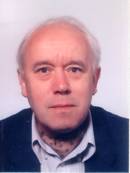 A. (Lex) P. J. van Deursen studied Physics at the Radboud University in Nijmegen, The Netherlands. He received his PhD degree in Physics at that university in 1976 on an experimental study in Molecular Physics concerning weakly bound atomic and molecular complexes. After a postdoc period at the Max Planck Institut für Festkörperforschung, Hochfeld Magnetlabor in Grenoble (France), he returned to Nijmegen to work solid state physics on electronic structures of metals, alloys and semiconductors by high magnetic field techniques. In 1986 he moved to the Eindhoven University of Technology and shifted his attention to electromagnetic compatibility research and teaching. He has been engaged in IEC working groups, and has been member and chairman and of different committees in international conferences. He is senior member of IEEE, and member of CIGRE and the International Steering Committee of EMC Europe. Currently he is vice chairman of international URSI Commission E. A. (Lex) P. J. van Deursen studied Physics at the Radboud University in Nijmegen, The Netherlands. He received his PhD degree in Physics at that university in 1976 on an experimental study in Molecular Physics concerning weakly bound atomic and molecular complexes. After a postdoc period at the Max Planck Institut für Festkörperforschung, Hochfeld Magnetlabor in Grenoble (France), he returned to Nijmegen to work solid state physics on electronic structures of metals, alloys and semiconductors by high magnetic field techniques. In 1986 he moved to the Eindhoven University of Technology and shifted his attention to electromagnetic compatibility research and teaching. He has been engaged in IEC working groups, and has been member and chairman and of different committees in international conferences. He is senior member of IEEE, and member of CIGRE and the International Steering Committee of EMC Europe. Currently he is vice chairman of international URSI Commission E.
Session 7: Radio Telescope Subsystems
Dr Marianna Ivashina (Chalmers University of Technology): "Analysis of the Noise Performance and Sensitivity of Receiving Array Systems with Strongly Coupled Antenna Elements"
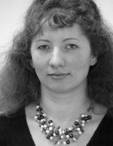 Marianna V. Ivashina was born in Ukraine in 1975. She received the combined B.Sc/M.Sc. degree and Ph.D. both in Electrical Engineering from the Sevastopol National Technical University (SNTU), Sevastopol, Ukraine, in 1995 and 2000, respectively. From 2001 to 2004 she was a Postdoctoral Researcher and from 2004 till 2010 an Antenna System Scientist at ASTRON (The Netherlands Institute for Radio Astronomy). During this period she has carried out research on an innovative focal plane array (phased array feed) technology for the new generation radio telescope, known as the Square Kilometer Array (SKA). In 2002, she also stayed as a visiting scientist at the European Space Agency (ESA), ESTEC in the Netherlands, where she studied multiple-beam array feeds for the satellite telecommunication system Large Deployable Antenna (LDA). She received the URSI Young Scientists Award for GA URSI, Toronto, Canada (1999), APS/IEEE Travel Grant, Davos, Switzerland (2000), the 2nd Best Paper Award (’Best team contribution’) at the ESA Antenna Workshop (2008) and the VINNOVA - Marie Curie Actions International Qualification Fellowship VINMER (2009) for a joint project with Chalmers University of Technology at Department of Earth and Space Sciences (Sweden), at which she has been employed from January 2011. She has served as a Guest Editor of the Special Issue on Antennas for Next Generation Radio Telescopes of the IEEE Transactions on Antennas and Propagation during 2010-2011. Her research interests are feeds for reflector antennas, phased array antennas, receiving antenna systems, system modeling techniques, polarimetry, signal processing for phased array antennas, and radio astronomy. Marianna V. Ivashina was born in Ukraine in 1975. She received the combined B.Sc/M.Sc. degree and Ph.D. both in Electrical Engineering from the Sevastopol National Technical University (SNTU), Sevastopol, Ukraine, in 1995 and 2000, respectively. From 2001 to 2004 she was a Postdoctoral Researcher and from 2004 till 2010 an Antenna System Scientist at ASTRON (The Netherlands Institute for Radio Astronomy). During this period she has carried out research on an innovative focal plane array (phased array feed) technology for the new generation radio telescope, known as the Square Kilometer Array (SKA). In 2002, she also stayed as a visiting scientist at the European Space Agency (ESA), ESTEC in the Netherlands, where she studied multiple-beam array feeds for the satellite telecommunication system Large Deployable Antenna (LDA). She received the URSI Young Scientists Award for GA URSI, Toronto, Canada (1999), APS/IEEE Travel Grant, Davos, Switzerland (2000), the 2nd Best Paper Award (’Best team contribution’) at the ESA Antenna Workshop (2008) and the VINNOVA - Marie Curie Actions International Qualification Fellowship VINMER (2009) for a joint project with Chalmers University of Technology at Department of Earth and Space Sciences (Sweden), at which she has been employed from January 2011. She has served as a Guest Editor of the Special Issue on Antennas for Next Generation Radio Telescopes of the IEEE Transactions on Antennas and Propagation during 2010-2011. Her research interests are feeds for reflector antennas, phased array antennas, receiving antenna systems, system modeling techniques, polarimetry, signal processing for phased array antennas, and radio astronomy.
|


